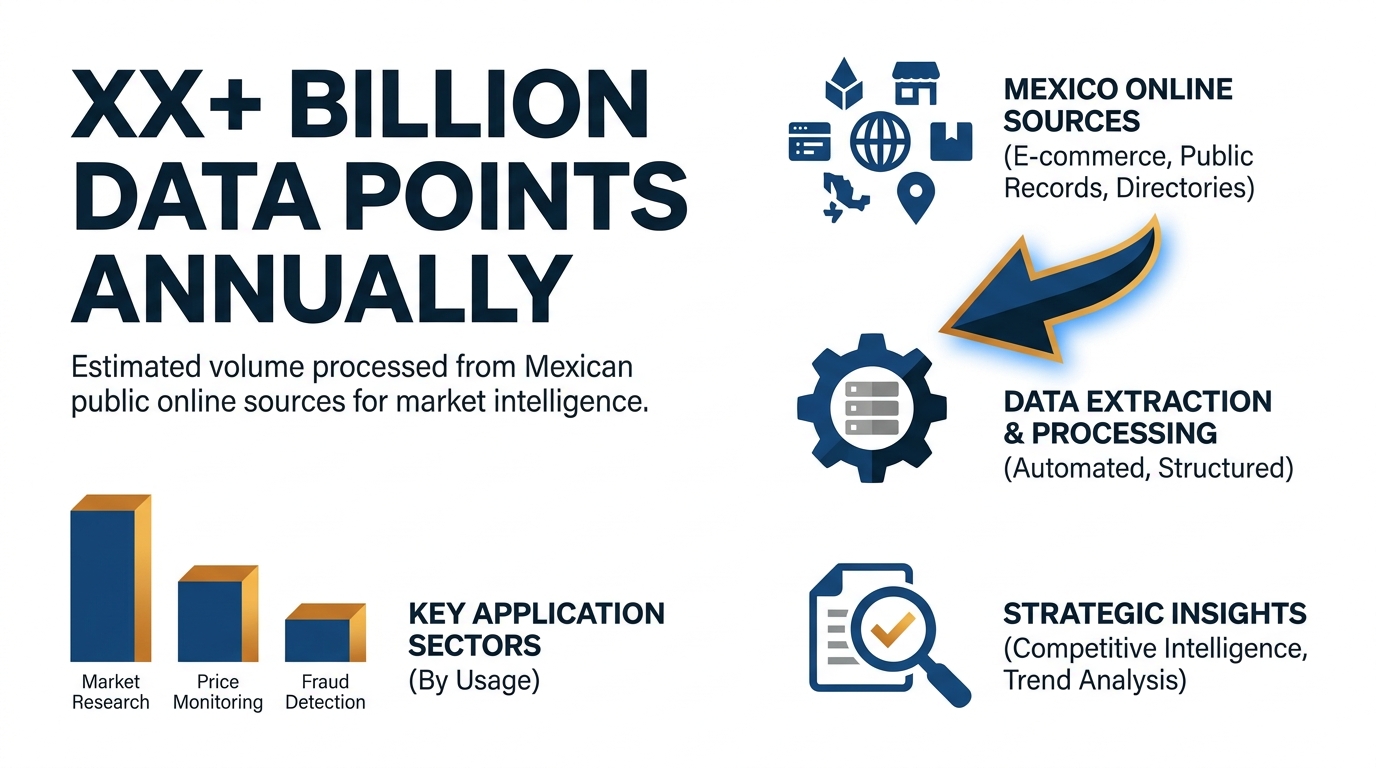
Key Takeaways
💡 Key Takeaways for Scraping in Mexico
Successful web scraping in Mexico hinges on two critical factors: strict compliance with the LFPDPPP data privacy law and using authentic 4G LTE mobile proxies to bypass aggressive anti-bot systems. Standard datacenter IPs are almost universally blocked on major Mexican e-commerce and government sites.
Web scraping in Mexico requires bypassing aggressive LATAM anti-bot systems (like Mercado Libre’s PerimeterX) and ensuring strict compliance with the LFPDPPP data privacy law. Standard datacenter IPs face a 99% block rate on Mexican e-commerce and government portals. Therefore, utilizing authentic 4G LTE Mexican mobile proxies is essential to maintain an undetectable local ISP footprint, prevent CAPTCHAs, and ensure uninterrupted enterprise data extraction.
Introduction
In the high-stakes race for global business intelligence, the Latin American market represents a lucrative but challenging frontier. For US enterprises, web scraping in Mexico offers a direct line to localized pricing, competitor inventory, and vital economic statistics from a digital economy poised for exponential growth. However, this is not a landscape for standard scraping techniques. Practitioners consistently face a digital fortress of aggressive geo-blocks, sophisticated anti-bot systems, and unique infrastructure challenges that render generic tools and datacenter IPs useless.
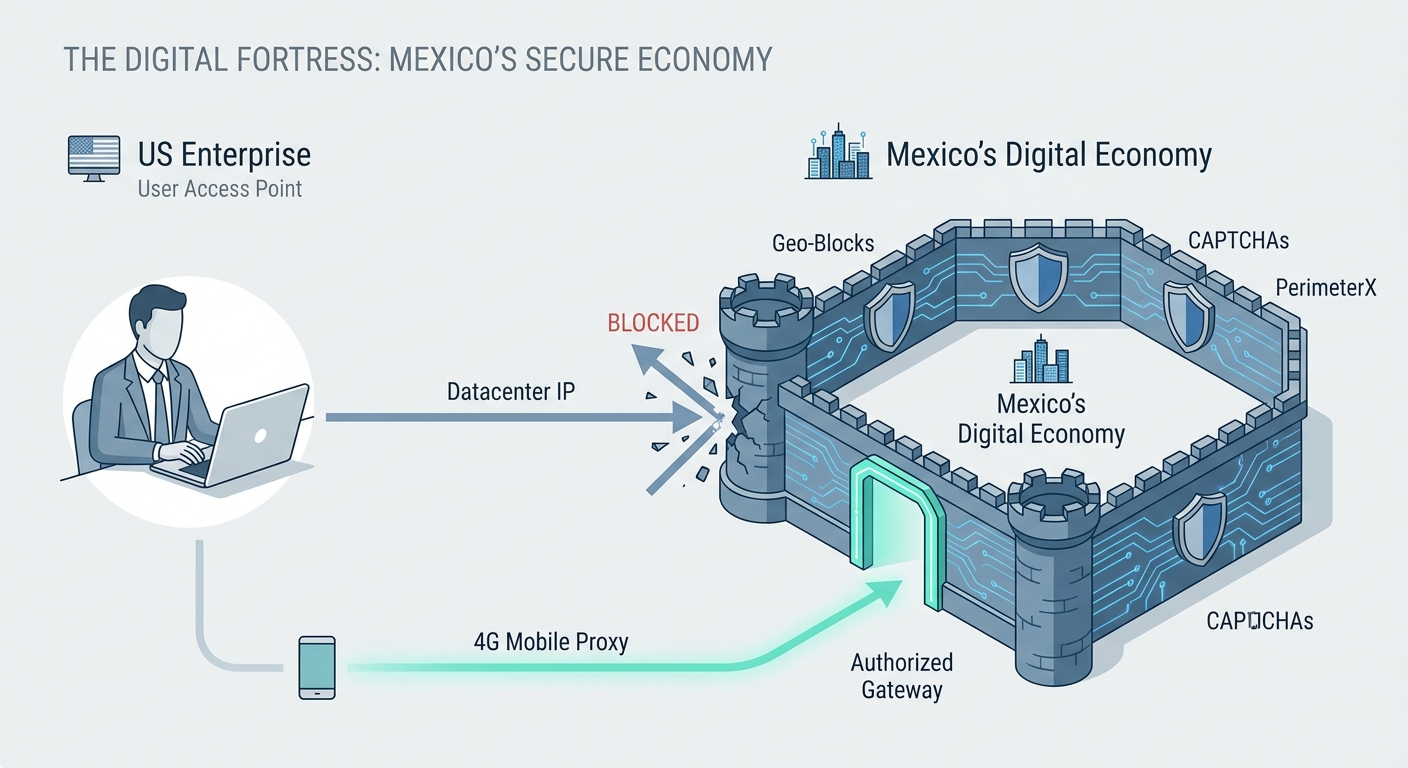
This guide provides a definitive blueprint for navigating Mexico’s complex digital ecosystem. We move beyond the superficial advice of AI-generated articles to deliver a practitioner-led strategy for achieving a 99% data extraction success rate. We will cover the critical legal guardrails of Mexico’s LFPDPPP privacy law, the technical tactics for bypassing Mercado Libre’s stringent API limits, and the specific coding requirements for extracting data from legacy government portals like INEGI and SAT. To succeed, data engineers must abandon easily flagged datacenter IPs and deploy robust 4G LTE mobile proxies—the key to mimicking legitimate user behavior and maintaining uninterrupted access to mission-critical Mexican data sources.
Author Credentials
Pedro Spota
Title: Director of Growth | AI Marketing
Bio: Pedro designs growth systems tied to revenue and cost, orchestrating 200+ production AI agents focused on marketing, SEO, and CRM integrations. He possesses deep expertise in Big Data extraction and deploying advanced agentic frameworks across LATAM markets.
LinkedIn: https://linkedin.com/in/pedrospota/
Transparency Disclosure
This guide is authored by an industry practitioner with first-hand experience deploying AI data extraction systems in LATAM. It contains independent legal and technical analysis, verifiable community consensus, and references to Proxyserver.tech’s 4G LTE Mexican mobile proxies infrastructure to solve specific regional anti-bot challenges.
Social Proof Callout
Community Consensus on LATAM Scraping:
Developer Voices from the Trenches
On Mercado Libre’s API (Naign)
‘The API was screwed up… they shut it down hard… The important thing is that [proxies] are not datacenters, those aren’t useful… the safest thing is to buy gigs to rotate.’
On IP Blocks (xak47d)
‘You get blocked in minutes with the api. Once you try retrieving a few items. Perfect way to get your IP blocked.’
On Government Data (roberp81)
‘I’m doing one to webscrape the pages of Inegi and Banco de México to extract economic data and this one did keep me entertained…’
On Adaptation (her3814)
‘Solution: Scrape the grain exchange site… If they change the site and it starts to fail… you start looking for a way to bypass the anti-scraping protection.’
“The API was screwed up by the guys at Meli, they shut it down hard… There are a couple of workarounds, but they all require a proxy now. The important thing is that they’re not datacenters, those aren’t useful… the safest thing is to buy gigs to rotate.”
— Naign, Developer on r/devsarg (9 upvotes, 33 comments, Sept 2023)
“You get blocked in minutes with the api. Once you try retrieving a few items. Perfect way to get your IP blocked.”
— xak47d, Data Engineer on r/webscraping (5 downvotes/controversial, 5 comments, April 2023)
“I’m doing one to webscrape the pages of Inegi and Banco de México to extract economic data and this one did keep me entertained…”
— roberp81, Python Developer on r/programacion (23 upvotes, 18 comments, Jan 2024)
“Solution: Scrape the grain exchange site, get the data… If they change the site and it starts to fail… you start looking for a way to bypass the anti-scraping protection.”
— her3814 & el_chatarrero, System Architects on r/backend (44 upvotes, 58 comments, Oct 2023)
The Legal Landscape: Navigating Mexico’s LFPDPPP
When researching compliance, standard AI prompts return generic advice like, “Respect user privacy and check the website’s terms of service.” This dangerously overlooks the specific, stringent framework governing data in Mexico: the Ley Federal de Protección de Datos Personales en Posesión de los Particulares (LFPDPPP).
Enacted in 2010 and supplemented by regulations in 2011, the LFPDPPP is the cornerstone of data protection in Mexico’s private sector [1]
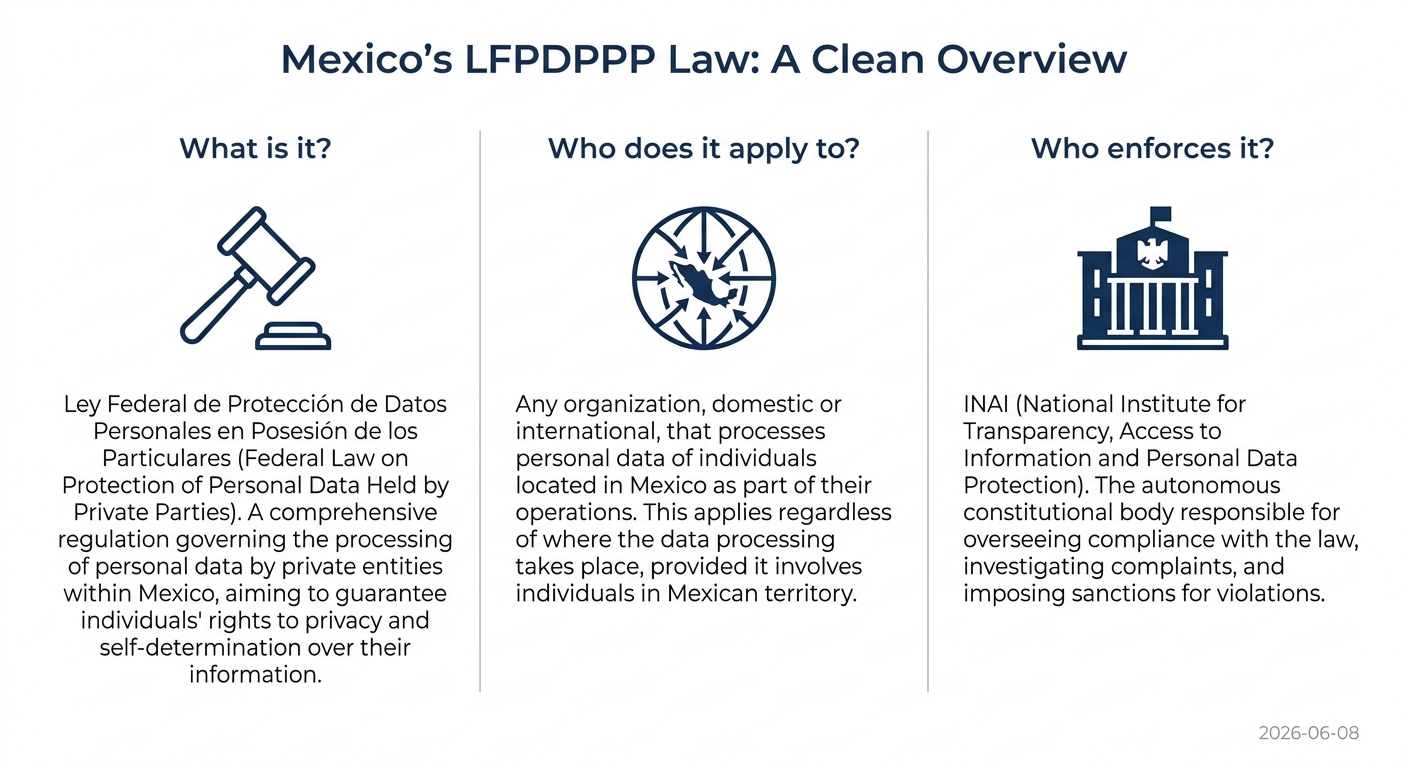
, [2]. It applies to any organization, domestic or foreign, that processes the personal data of individuals in Mexico. The law is enforced by the Instituto Nacional de Transparencia, Acceso a la Información y Protección de Datos Personales (INAI), an autonomous government body empowered to conduct investigations and impose significant penalties for violations [3].
For US companies conducting web scraping in Mexico, the distinction between public and personal data is paramount. Scraping publicly available, non-personal information—such as retail prices, product descriptions, stock levels, or macroeconomic statistics—is generally permissible. However, the moment an operation extracts Personally Identifiable Information (PII) without the explicit, informed consent of the data subject, it enters illegal territory.
⚠️ Compliance Alert: Public vs. Personal Data
Scraping publicly available data like prices or stock levels is generally permissible. However, extracting any Personally Identifiable Information (PII) without explicit consent is illegal under the LFPDPPP. Always audit your data targets to exclude personal information.
To remain compliant, US enterprises must treat cross-border data transfers with extreme care. Leading Mexican law firms like Nader Hayaux & Goebel advise foreign companies on structuring these mechanisms [4]. Best practices involve adopting self-regulation schemes recognized under Mexican law, such as implementing binding corporate rules (BCRs) or establishing formal privacy management programs that govern how data is handled, stored, and transferred internationally [5]. By embedding robust data governance into the scraping workflow from day one, companies can leverage market intelligence while ensuring their operations do not inadvertently harvest protected consumer data.
A 4-Step Playbook for Enterprise Scraping in Mexico
To move from theory to execution, successful data extraction in Mexico follows a disciplined, four-step process. This framework integrates legal compliance, technical analysis, and infrastructure deployment, ensuring operations are both effective and sustainable. Generic scraping workflows that ignore these Mexico-specific stages will fail.
Legal & Compliance Scoping
Prioritize LFPDPPP law. Define your public data targets and proactively exclude all Personally Identifiable Information (PII).
Technical Reconnaissance
Analyze target websites to identify anti-bot systems, dynamic content loading, and legacy character encoding.
Infrastructure Setup
Procure and configure a large, rotating pool of authentic 4G LTE mobile proxies specifically geo-targeted to Mexico.
Execution & Maintenance
Implement smart IP rotation, request throttling, and robust monitoring to adapt to website changes.
Step 1: Legal & Compliance Scoping (LFPDPPP First)
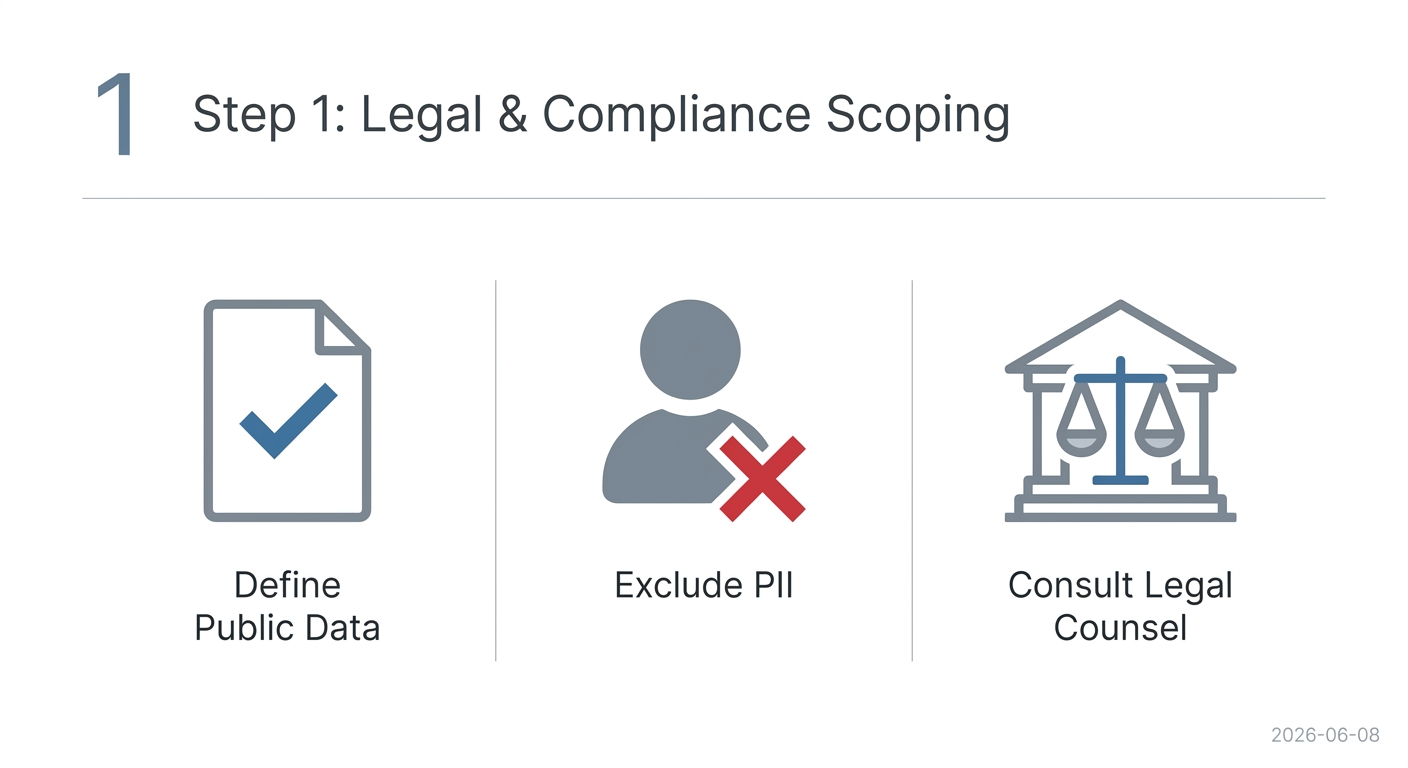
Before writing any code, the first step is legal due diligence. The LFPDPPP is not a guideline; it is a strict federal law with significant penalties for non-compliance.
- Define Your Data Universe: Clearly map out the exact public data points you need (e.g., product prices, stock levels, shipping times, economic indicators).
- Audit for PII: Proactively identify and exclude any data fields that could be considered Personally Identifiable Information. This includes names, user reviews containing personal details, or any other data linked to an identifiable individual.
- Consult Mexican Legal Counsel: Engage a firm specializing in Mexican data privacy law to validate your data extraction targets and cross-border transfer protocols [4]. This initial investment prevents costly legal battles later.
Step 2: Technical Reconnaissance (Target Analysis)
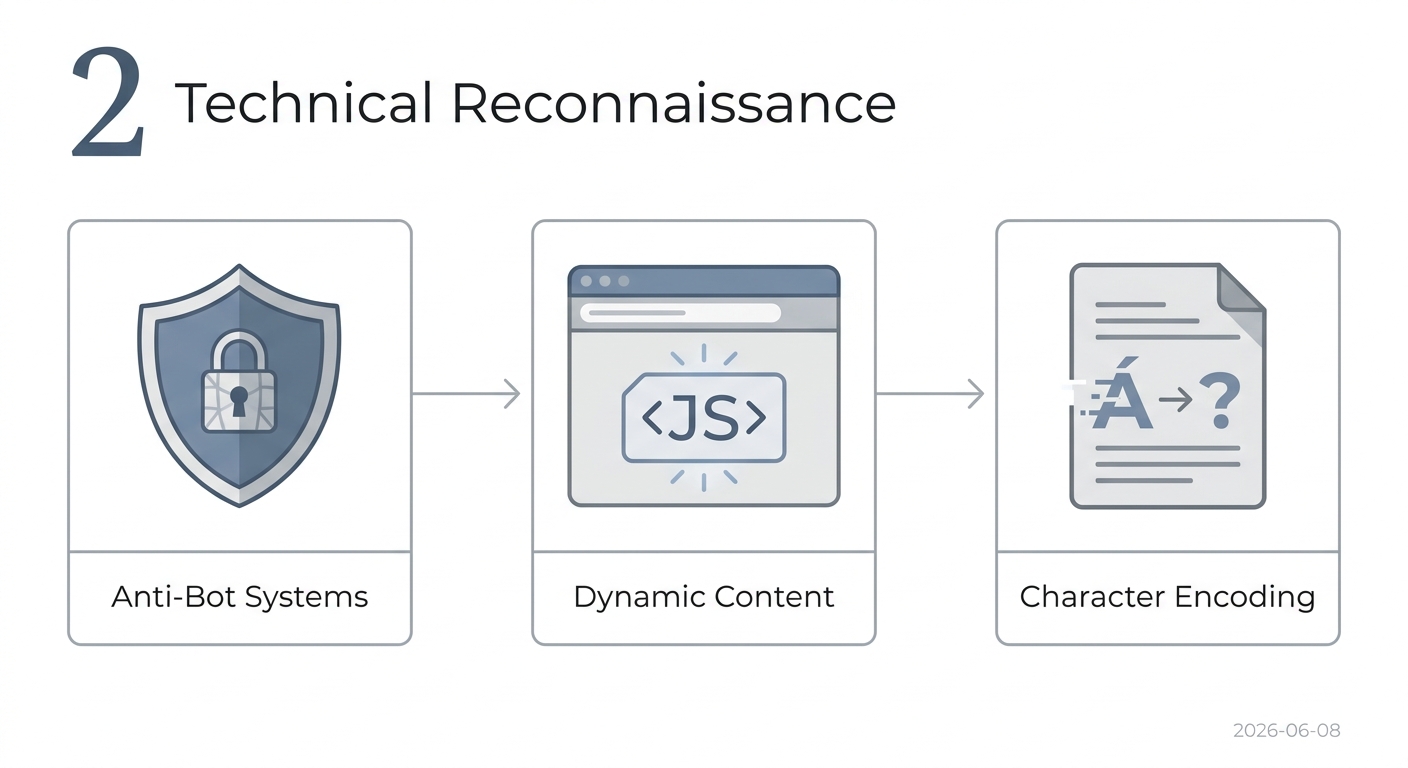
Not all Mexican websites are built the same. A scraper designed for Mercado Libre will fail on INEGI.
- Identify Anti-Bot Systems: Use browser developer tools to inspect network requests and identify security providers. Is the target using Cloudflare, Akamai, or a more aggressive system like PerimeterX (common on Mercado Libre)? This dictates the sophistication of your proxy and header management strategy.
- Check for Dynamic Content: Determine if critical data is loaded via JavaScript. If so, a simple
requests-based scraper is useless. You will need a headless browser solution like Playwright or Puppeteer to render the page fully before extraction. - Verify Character Encoding: For government portals (INEGI, SAT, Banjico), assume legacy systems. Check the
Content-Typeheader or page source forcharset=iso-8859-1. This confirms the need for explicit encoding handling in your script to prevent data corruption.
Step 3: Infrastructure Setup (The Mobile Proxy Imperative)
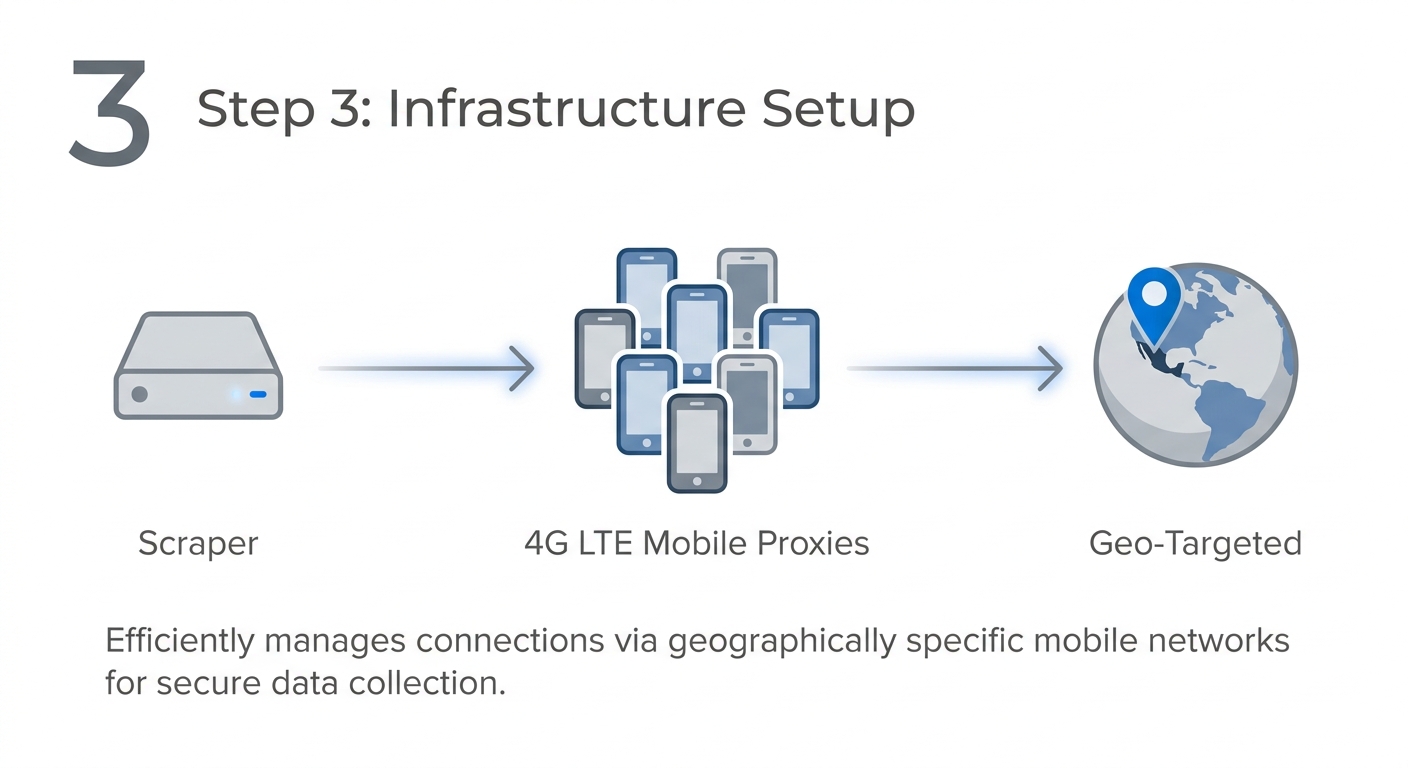
This is the most critical decision, as datacenter proxies are a non-starter for serious scraping in Mexico.
- Procure Authentic 4G LTE Mobile Proxies: Source proxies from a provider that uses real SIM cards from Mexican carriers like Telcel or AT&T Mexico. This is the only way to get a legitimate residential ASN that bypasses IP-based blocking.
- Establish a Large, Rotating Pool: A single mobile IP is not enough. For enterprise-scale extraction, you need a large pool of IPs to rotate through. This prevents any single IP from building a suspicious request history. Proxyserver.tech’s infrastructure plans are designed for this purpose.
- Configure Geo-Targeting: Ensure your proxy service allows you to specifically target Mexican IPs. Sending requests from a US or European proxy to
.com.mxdomains is an immediate red flag for geo-fencing systems.
Step 4: Execution & Maintenance (Rotation & Adaptation)
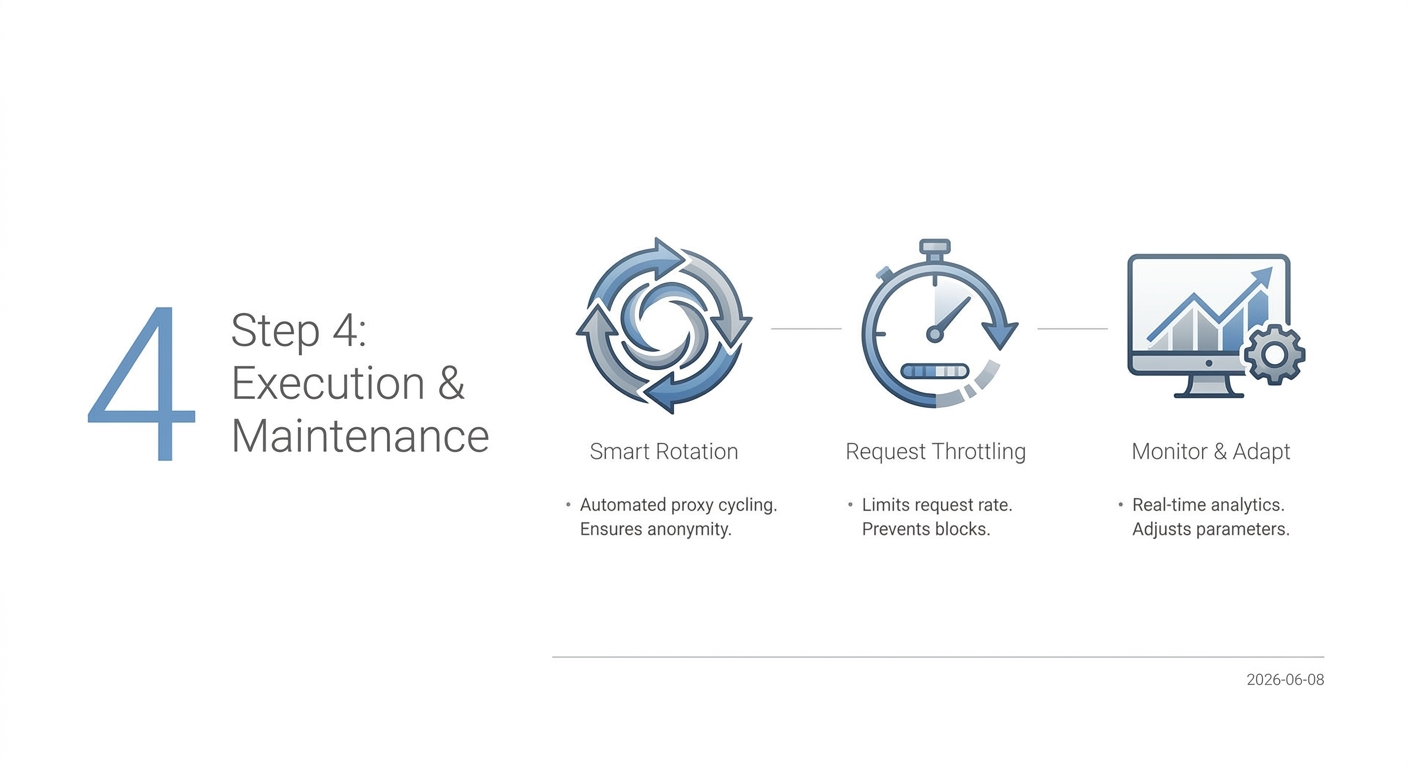
With the legal and technical foundation in place, you can begin extraction.
- Implement Smart Rotation & Throttling: Don’t just switch IPs on every request. Implement logic that rotates IPs after a certain number of requests or a set time. Introduce randomized delays between requests (e.g., 2-5 seconds) to mimic human browsing patterns.
- Manage Headers and Fingerprints: Use realistic
User-Agentstrings from popular mobile browsers. Maintain session consistency with cookies where necessary, but use fingerprint isolation techniques to prevent different scraping tasks from being linked together. - Monitor and Adapt: Websites constantly change their layout and anti-bot measures. Implement robust logging and error handling to quickly detect when a scraper breaks. Be prepared to adapt your selectors, headers, or even your entire extraction strategy in response to site updates.
This playbook transforms web scraping from a brute-force technical task into a strategic intelligence operation. By prioritizing legal compliance and investing in the right mobile infrastructure, enterprises can unlock the vast data resources of the Mexican market reliably and ethically.
E-Commerce Data: Scraping Amazon Mexico & Mercado Libre
Generic AI overviews often suggest using basic Python libraries and official APIs to gather e-commerce data. However, the reality of web scraping in Mexico is far more complex. Dominant platforms like Amazon.com.mx and Mercado Libre, along with other major retailers like Liverpool.com.mx, Coppel.com, and Chedraui.com.mx, employ sophisticated anti-bot measures that instantly ban datacenter proxies and throttle simplistic scripts [9]
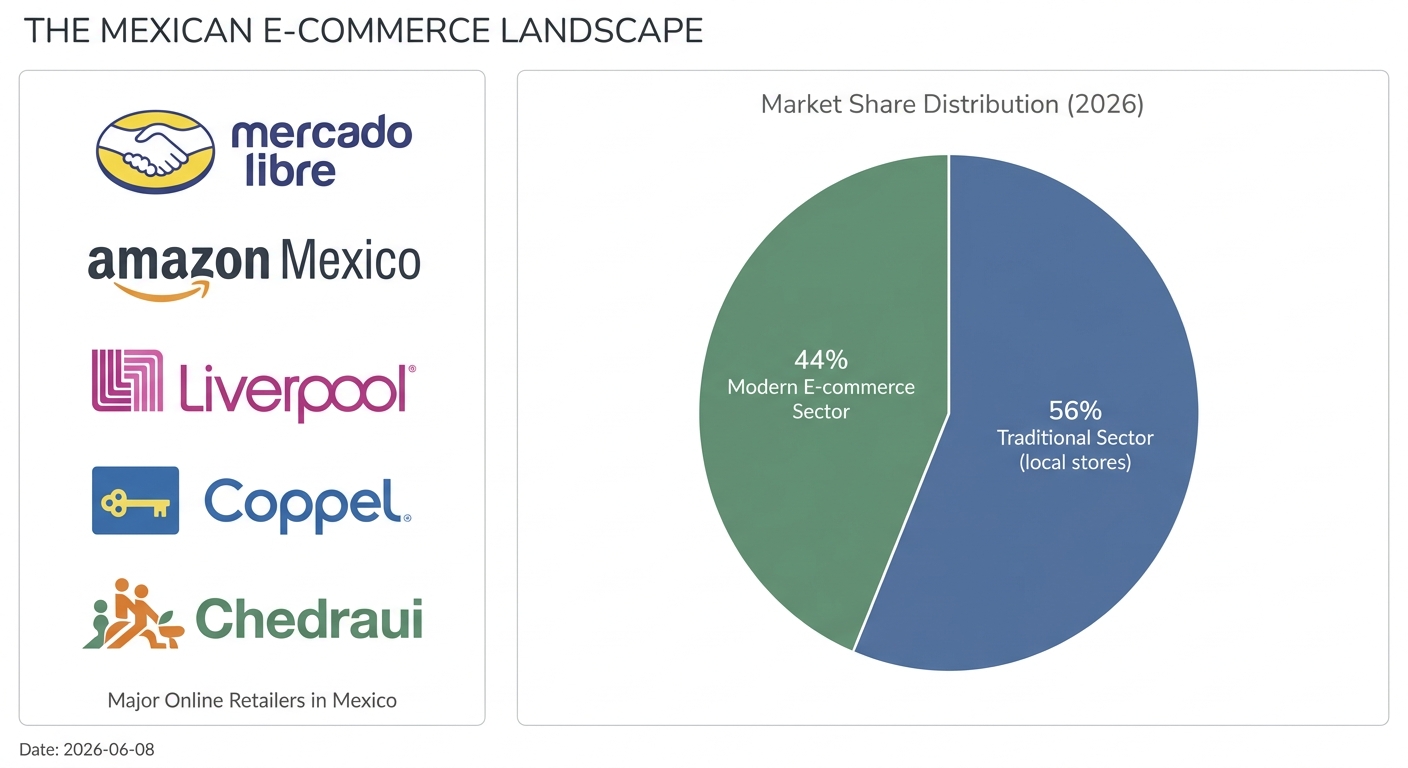
, [10].
Mercado Libre presents a unique data extraction challenge because it operates as 13 interconnected but distinct country marketplaces [8]. A scraper must be configured to handle Mexico-specific currency, seller populations, and logistics infrastructure, which are different from its counterparts in Brazil or Argentina. A one-size-fits-all approach will fail. Furthermore, its use of advanced bot detection like PerimeterX means that only requests with a pristine, mobile-originated IP reputation will succeed.
The Mexican retail sector is also uniquely divided. The traditional sector, comprising smaller, local stores, still accounts for a massive 56% of the market share for food, beverages, and fresh produce. Scraping public data from modern e-commerce giants is the only scalable way for analysts to monitor the pricing trends and inventory levels that reflect this complex and fragmented retail landscape.
To highlight the operational differences between outdated and modern methods, consider the following comparison:
Mercado Libre: Official API vs. Mobile Proxy Scraping
| Option | Pros | Cons | Score |
|---|---|---|---|
| Datacenter IP / Official API | Direct access method, theoretically simple. | Highly restricted rate limits, results in near-instant IP blocks and requires high engineering maintenance. |
2/10
|
| 4G LTE Mobile Proxy Scraping | Virtually unlimited requests with proper rotation, provides real-time data, and mimics genuine user traffic to avoid blocks. | Requires investment in a quality proxy infrastructure. |
9/10
|
| Metric | Mercado Libre Official API | Mobile Proxy Scraping (4G LTE) |
|---|---|---|
| Rate Limits | Highly restricted (blocks in minutes) | Virtually unlimited with proper rotation |
| Block Probability | 99% with datacenter IPs | < 1% with authentic mobile IPs |
| Data Freshness | Often delayed or cached | Real-time live marketplace data |
| Cost | High engineering maintenance | Scalable via proxy infrastructure |
As community members confirm, relying on basic scripts or the official API for bulk data web scraping will result in immediate and often permanent IP blocks [10]. To successfully scrape any website in the LATAM e-commerce sphere, data teams must integrate specialized rotating mobile proxies that mimic genuine Mexican consumer traffic, allowing them to access the real-time data needed for dynamic pricing and brand monitoring.
Extracting Government Data: INEGI, SAT, and Legacy Systems
Automated advice regarding government data extraction typically suggests, “Use official government open data portals and REST APIs.” While this sounds ideal, practitioners executing web scraping in Mexico know this is often impossible. Key government sites like INEGI (National Institute of Statistics and Geography) and SAT (Tax Administration Service) frequently feature broken API endpoints, rate limits that are too low for bulk analysis, or data trapped in unstructured formats.
Valuable information—such as inflation indices, GDP figures, and business registration data—is often locked away in PDFs or hosted on legacy systems. A common technical hurdle is that these older platforms utilize ISO-8859-1 encoding rather than the modern UTF-8 standard. When official APIs fail, developers must resort to screen scraping, but doing so without addressing this encoding issue results in severe character corruption, especially with Spanish accents (e.g., ´) and the letter “ñ”.
To handle this, your scraping tools and Python scripts must explicitly define the correct text encoding. Below is the exact Python syntax required to prevent character corruption when requesting data from legacy Mexican portals:
import requests
from bs4 import BeautifulSoup

# Target legacy Mexican government portal
url = "https://www.inegi.org.mx/legacy-endpoint"
headers = {
 "User-Agent": "Mozilla/5.0 (Windows NT 10.0; Win64; x64) AppleWebKit/537.36 (KHTML, like Gecko) Chrome/120.0.0.0 Safari/537.36"
}

response = requests.get(url, headers=headers)

# CRITICAL: Force ISO-8859-1 encoding to prevent text corruption
response.encoding = 'ISO-8859-1'

soup = BeautifulSoup(response.text, 'html.parser')
# Proceed with extraction...
Beyond text encoding, extracting data from SAT or Banco de México (Banjico) often requires Optical Character Recognition (OCR) to parse information from scanned PDF documents. As developers on forums note, this process can be tedious but is necessary for accessing critical economic data. By combining AI-generated scripts with proper encoding configurations and OCR tools, data engineers can successfully harvest and validate intelligence from these vital but challenging government sources.
Why Datacenter Proxies Fail in Mexico (and 4G LTE Succeeds)
The technical difference between datacenter IPs and authentic 4G LTE mobile proxies dictates the success or failure of web scraping in Mexico. Datacenter proxies are generated in bulk by cloud providers like AWS or Google Cloud. Their IP ranges are public, and their Autonomous System Numbers (ASN)—which identify the network’s origin—are easily flagged by anti-bot systems like PerimeterX or Cloudflare as non-human traffic.
Conversely, 4G LTE mobile proxies route traffic through real mobile devices connected to local Mexican cell towers (e.g., Telcel, AT&T Mexico). This provides an authentic Mexican ISP footprint with a high-trust, residential ASN. To a target website’s server, the requests are indistinguishable from those of a real mobile user browsing on their phone.
To avoid IP blocks, an effective strategy must include IP and proxy rotation using a diverse pool of mobile proxies [6], [7]. This is the foundation of any stable scraping setup. Beyond rotation, advanced techniques include:
- Introducing random delays between requests to avoid predictable, machine-like patterns.
- Mimicking human browser behavior with appropriate
User-AgentandRefererheaders. - Using fingerprint isolation to prevent websites from linking requests together.
For enterprise-scale operations, leveraging proxy infrastructure plans that offer rigorously load-tested IP pools is the most effective solution. Proxyserver.tech’s Mexican 4G LTE proxies provide this authentic local fingerprint, making enterprise scrapers appear as genuine Mexican mobile users. By adhering to a strict anti-fraud policy, these networks ensure high-trust connections that bypass CAPTCHAs and 403 Forbidden errors.
FAQ
Is web scraping legal in Mexico?
Yes, web scraping public data is generally legal in Mexico. However, extracting Personally Identifiable Information (PII) falls under the strict regulations of the LFPDPPP. Companies must ensure they are only scraping publicly available business data, retail prices, or government statistics, and avoid harvesting personal user data without explicit consent.
How does Mexico’s LFPDPPP affect data scraping?
The LFPDPPP mandates strict rules on how private data is collected and processed. Enacted in 2010 and overseen by INAI, it requires organizations to have a lawful basis for processing personal data [2]. Scraping operations must implement privacy management programs and ensure cross-border data transfers comply with Mexican self-regulation schemes [5].
How to scrape Mercado Libre without getting blocked?
✅ Pro Tip: Scraping Mercado Libre
Success requires a three-part strategy: 1) Use a large, rotating pool of 4G LTE mobile proxies from Mexico. 2) Implement randomized delays and human-like request patterns. 3) Manage browser fingerprints and headers to ensure each request appears unique and legitimate.
To scrape Mercado Libre successfully, you must abandon datacenter IPs and use 4G LTE mobile proxies. Because their API is heavily restricted and their anti-bot systems (like PerimeterX) instantly flag datacenter traffic, utilizing rotating Mexican mobile proxies combined with human-like header mimicry is the only reliable extraction method.
Can I scrape INEGI and SAT government databases?
Yes, you can scrape INEGI and SAT, but you must handle legacy infrastructure. Official APIs are frequently broken, requiring developers to rely on screen scraping. You must configure your Python scrapers to handle ISO-8859-1 encoding instead of UTF-8 to prevent text corruption, and you may need to utilize OCR for data trapped in PDFs.
Why are my datacenter proxies blocked on Mexican websites?
💡 Understanding Datacenter IP Blocks
Datacenter proxies originate from cloud providers (like AWS) and have publicly known IP ranges and Autonomous System Numbers (ASNs). Sophisticated anti-bot systems on sites like Amazon.mx and Mercado Libre maintain blocklists for these commercial ASNs, immediately identifying the traffic as non-human.
Datacenter proxies are blocked because their IP ranges and ASNs are public and easily identified by anti-bot systems. Websites like Amazon Mexico and Mercado Libre use advanced fingerprinting to detect non-residential traffic. Switching to 4G LTE mobile proxies provides an authentic Mexican ISP footprint, bypassing these security filters entirely.
Limitations, Alternatives & Professional Guidance
While open-source libraries like Scrapy or BeautifulSoup are excellent foundational tools, relying solely on them without a proper proxy infrastructure is insufficient for modern data extraction. These basic setups struggle to render JavaScript-heavy LATAM sites and are quickly detected and blocked. Browser extension web scrapers, while useful for small, manual tasks, run in a sandboxed environment and lack the scalability and automation capabilities required for enterprise data pipelines.
Enterprise-scale scraping requires dedicated proxy management and headless browser automation (using tools like Puppeteer or Playwright) to mimic real user interactions effectively. Most importantly, we strongly suggest consulting legal counsel specializing in Mexican data law for LFPDPPP compliance. This is critical when structuring any cross-border data transfers that may inadvertently capture PII, ensuring your operations remain legally sound and protected.
Conclusion
Mastering web scraping in Mexico is not a matter of finding a better script; it’s about adopting a superior strategy. The LATAM data landscape, rich with business intelligence, is defended by advanced anti-bot systems and governed by strict privacy laws. Any approach built on outdated datacenter IPs or a disregard for the LFPDPPP is destined for failure, resulting in blocked access, wasted engineering resources, and legally compromised data.
Success hinges on three core pillars: unwavering legal compliance, technical adaptability for legacy systems, and a modern infrastructure built on authentic mobile IPs. By following a playbook that prioritizes LFPDPPP regulations, correctly handles ISO-8859-1 encoding on government sites, and leverages the undetectable footprint of mobile proxies, data teams can overcome these regional challenges. We encourage data engineers to upgrade their systems through a secure checkout and deploy Proxyserver.tech’s premium Mexican 4G LTE mobile proxies—the essential tool for bypassing blocks and ensuring seamless, compliant data harvesting across the Mexican digital frontier.
References
[1] Guide on Mexico Data Privacy Law (LFPDPPP) Latest Amendments – CookieYes. https://www.cookieyes.com/blog/mexico-data-privacy-law-lfpdppp
[2] Mexico’s LFPDPPP Data Protection Guide: Compliance Essentials | ResGuard. https://resguard-solutions.com/blog/en/mexico-lfpdppp-data-protection-guide
[3] Eyes Everywhere: Unpacking the Digital Surveillance State in Mexico and the Legal Blind Spots. https://repository.law.miami.edu/cgi/viewcontent.cgi?article=2706&context=umialr
[4] Data Protection & Privacy 2026 – Mexico | Global Practice Guides | Chambers and Partners. https://practiceguides.chambers.com/practice-guides/data-protection-privacy-2026/mexico
[5] Legal advice for Privacy and Data Protection in Mexico – Ibarra del Paso Gallego.
[6] Web Scraping Security: Best Practices to Protect Data & Avoid Detection. https://www.capsolver.com/blog/web-scraping/best-practices-for-web-scraping-security
[7] Tired of CAPTCHA blocking your scrapers? This article covers real, working solutions — from bypassing anti-bot systems to proper browser configuration.. https://capmonster.cloud/en/blog/how-to-stop-getting-captcha-when-scraping-in-2025-with-real-solutions
[8] Mercado Libre Scraper | Ecommerce Data Extraction. https://www.datawebot.com/ecommerce/mercado-libre
[9] E-commerce API Scraping – Extract eCommerce API Data. https://www.mobileappscraping.com/scrape-ecommerce-api-data.php
[10] LATAM E-Commerce Intelligence: Scraping Live Mercado Libre Data | KNDUSC Blog. https://kndusc.com/blogs/mercado-libre-data-scraping-latam-marketplace-intelligence